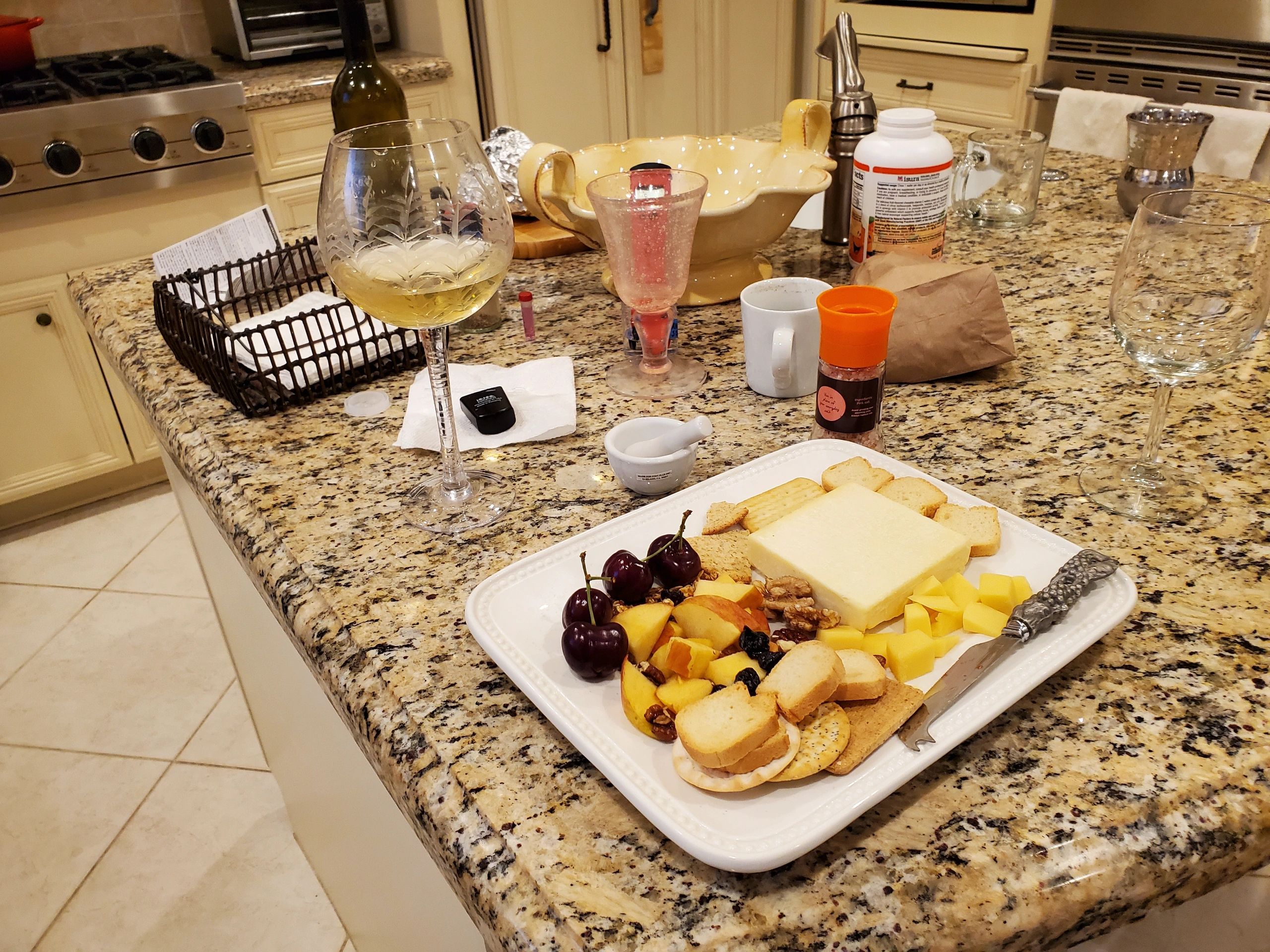
HAPPY HOUR!
Dirty Laundry Chardonnay from the Vista del Preseas Winery
About 20 years ago, I graduated... from drinking wine to making it!
On a south-facing slope, drenched with sunlight and refreshed with ocean breezes and morning mist, sits our vineyard. Vineyard construction was performed by Malibu Family Wines (Semler) in 2009, populated with Chardonnay vines. It is said that the best grapes result from "struggle," and struggle they do, here. The environment is difficult, with very rocky soil, and extremely moist conditions due to proximity to the ocean, resulting in persistent powdery mildew. The Chardonnay berries are small, with incredible flavor and complexity, but yields are very low, and results are difficult to consistently replicate. Moreover, we are off the rails following the burning of the vineyard in the Woolsey Fire of 2018.
Fortunately, I have been able to source phenomenal grapes from various regions of California year over year to make wine. I have produced Cabernet Sauvignon, Pinot Noir, Tempranillo, Sauvignon Blanc and Malbec Rose, among others, but my favorite effort is Chardonnay. I craft a big, BIG California Chardonnay. In most vintages, I integrate modern and classic French wine making elements. The primary fermentation is conducted under refrigeration, to preserve the delicate fruity attributes of the juice. The secondary fermentation is patiently extended on oak, sur lees ("on the lees," or yeast sediments), employing battonage (systematic stirring of the sediments), lending a nutty, rich undertone. I usually perform a complete malolactic fermentation, which yields the classic "creamy" or "buttery" mouth feel in the finished wine.
Most of the psychologically sound world drinks Chardonnay chilled. I drink my own wine at room temperature like a "cellar rat," in a big red-wine glass very slightly pre-warmed with a quick swirl of hot water; it really opens up the floral aromas and releases the more subtle tastes. Among the characteristics of recent vintages are notes of nectarine, apricot, and pineapple finishing with a creamy, nutty, toasted finish.
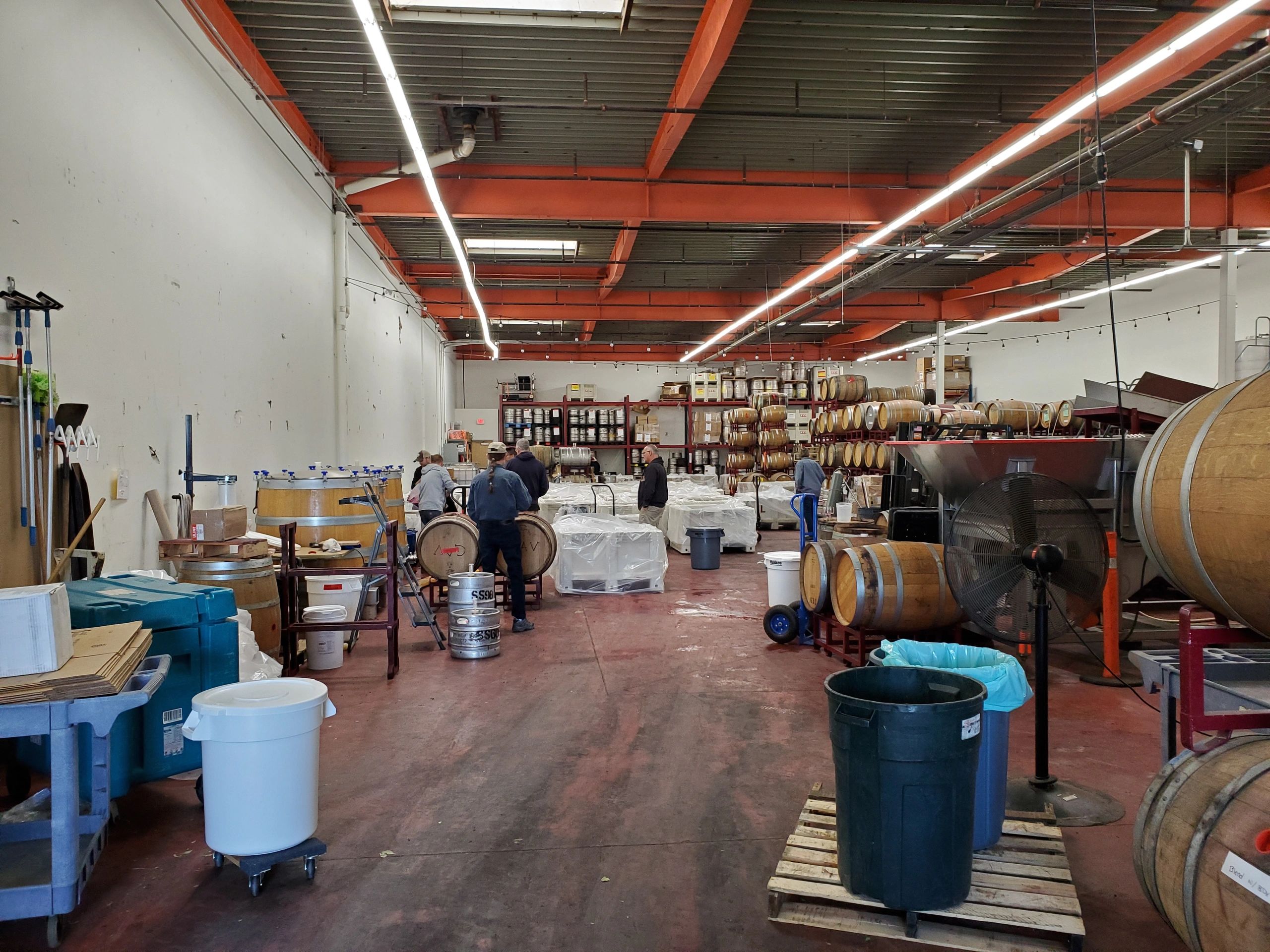
Camarillo Crush Winery (with thanks to the infinitely knowledgeable John Daume), the source of useful equipment and fantastic grapes from numerous , prestigious California vineyards
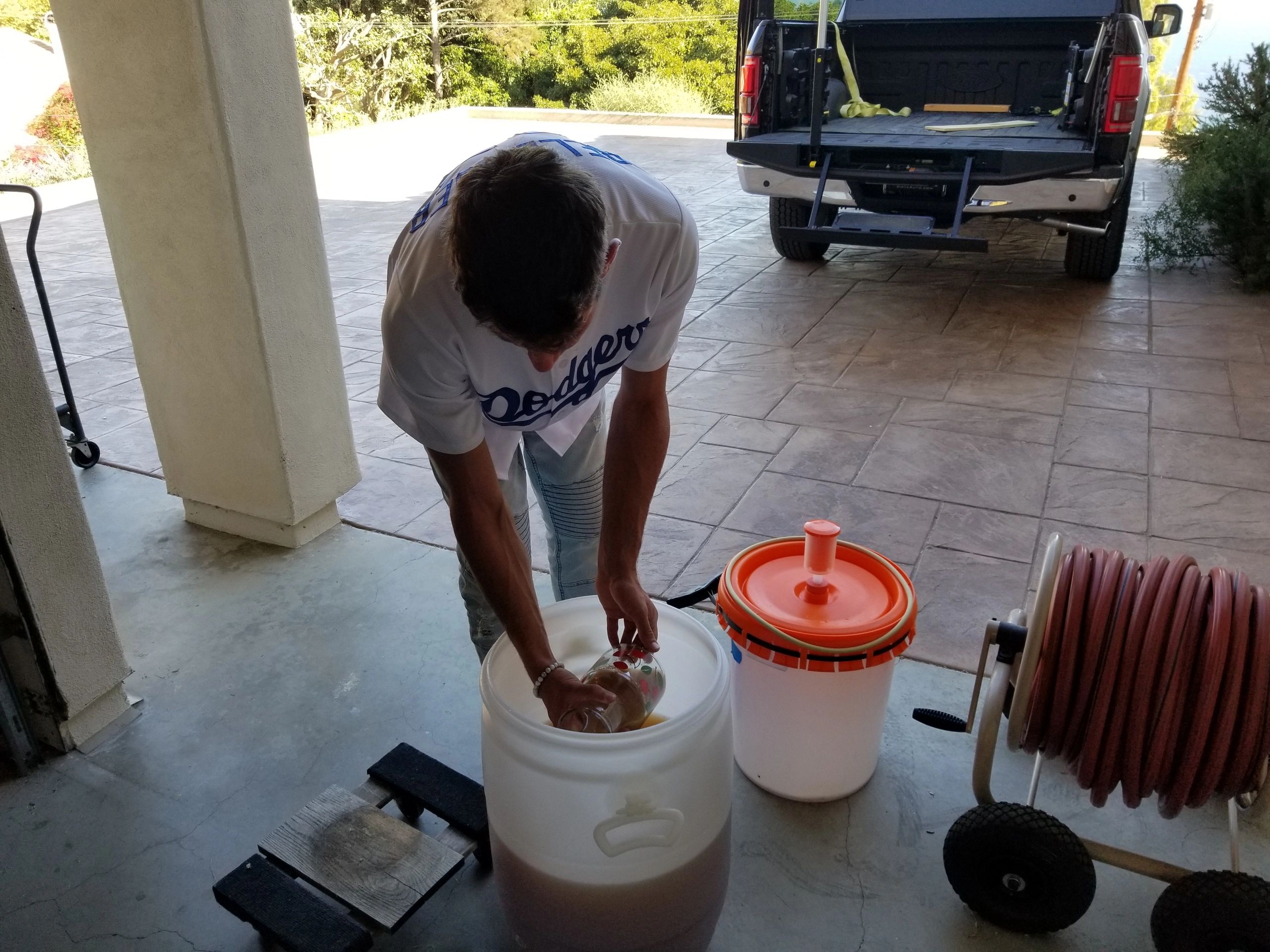
William inoculating the fresh pressed, settled Chardonnay juice (must) with the re-vitalized yeast in preparation for primary fermentation

This is the settled grape juice (known as "Must" in the industry) beginning to actively ferment following inoculation with the yeast.

Primary fermentation in progress. This requires a dedicated refrigeration unit, as I desire to preserve the delicate attributes of the wine that are frequently lost during "hot" (vigorous) fermentations. Note the "air lock" above, filled with disinfectant solution that allows the expanding pressure to release while blocking contaminants from entering the vessel.

Bulk storage wine is aged for 9 to 18 months, depending on vintage -specific factors. Here is the 2021 Sauvignon Blanc (left) and 2021 Chardonnay (right) in our temperature controlled main wine compartment.
The wine is ultimately bottled here at conclusion of bulk aging. Brenda is operating the "Corker," which tightly compresses the natural corks and leverages a plunger to force the corks into the mouth of the bottles. The corks in the pan (left) are being briefly sanitized prior to use.
The wine product is managed with precision industry standard laboratory equipment throughout the production process. At various stages, our wine is sampled and tested for parameters including, but not limited to, temperature, Ph, total acidity and Free SO2.
Guy Finello
Guy Finello inspired me to make wine. He lovingly and meticulously grew and crafted spectacular Cabernet Sauvignon at his home vineyard and winery in neighboring Thousand Oaks. His friendship was a blessing and joy, and he left our midst far too early. I will forever miss his good nature, infectious enthusiasm, ingenuity, love of life, sense of humor, and deep, booming laugh that fed our souls.
Cheers, Guy... To your exquisite life!